Planning bali airport domestic terminal group transfer
Bali Airport Domestic Terminal Group Transfer | Group Transfer should be planned from the complete itinerary, not from passenger count alone. Domestic terminal arrivals and departures. The useful starting information is pickup point, requested time, final destination, intermediate stops, passenger number and realistic luggage volume.
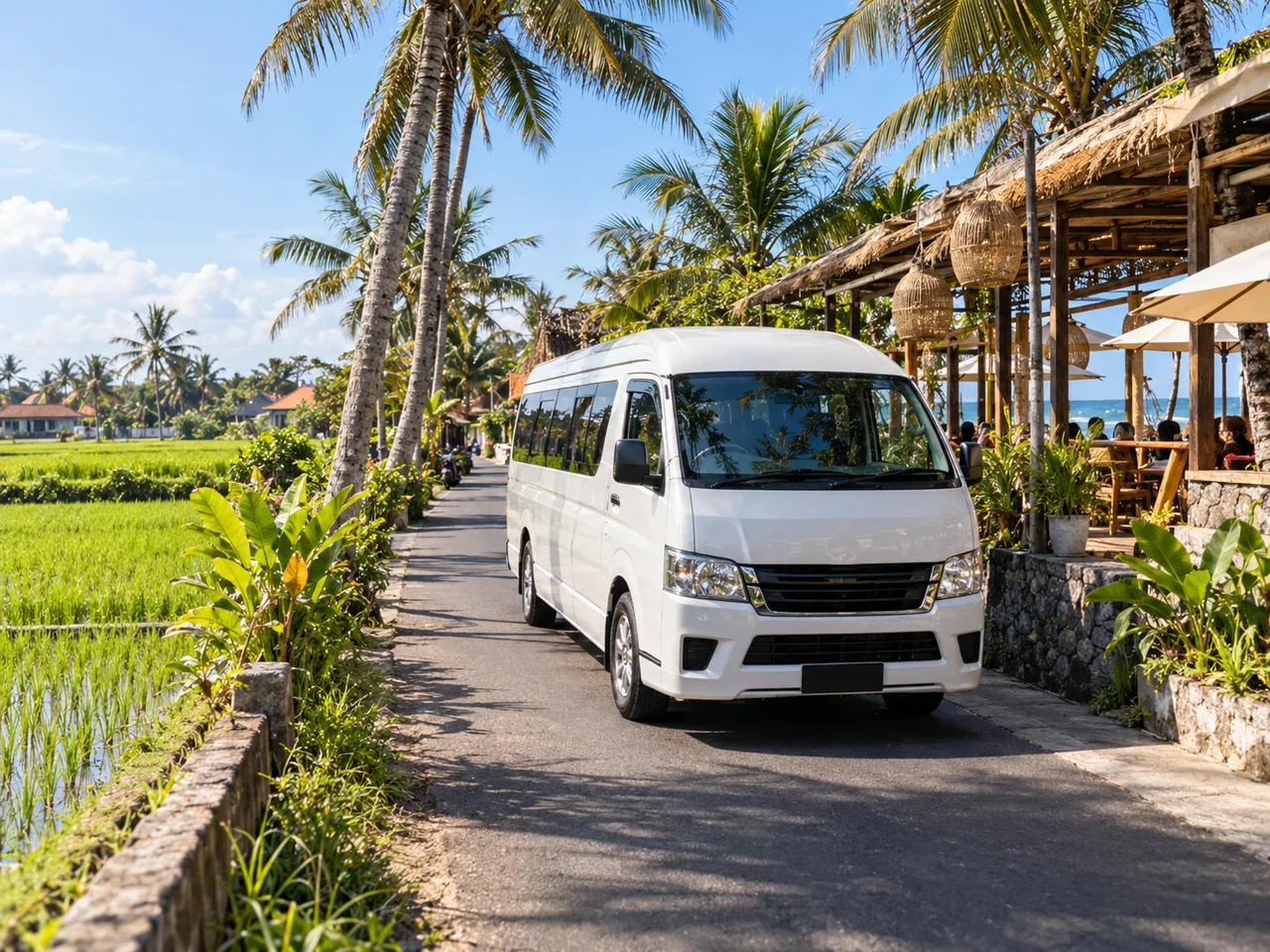
Bali road conditions vary sharply between the wide airport and bypass corridors, busy resort districts, village roads, steep highland routes and narrow access near villas or temples. A vehicle that is appropriate for one part of the journey may not be the best choice for every stop, so final allocation should consider the entire route.
Travel times in southern Bali can change significantly with congestion, ceremonies, weather, school traffic and major events. For airport departures, weddings, conferences and ferry connections, build a sensible buffer rather than planning around the shortest possible map estimate.
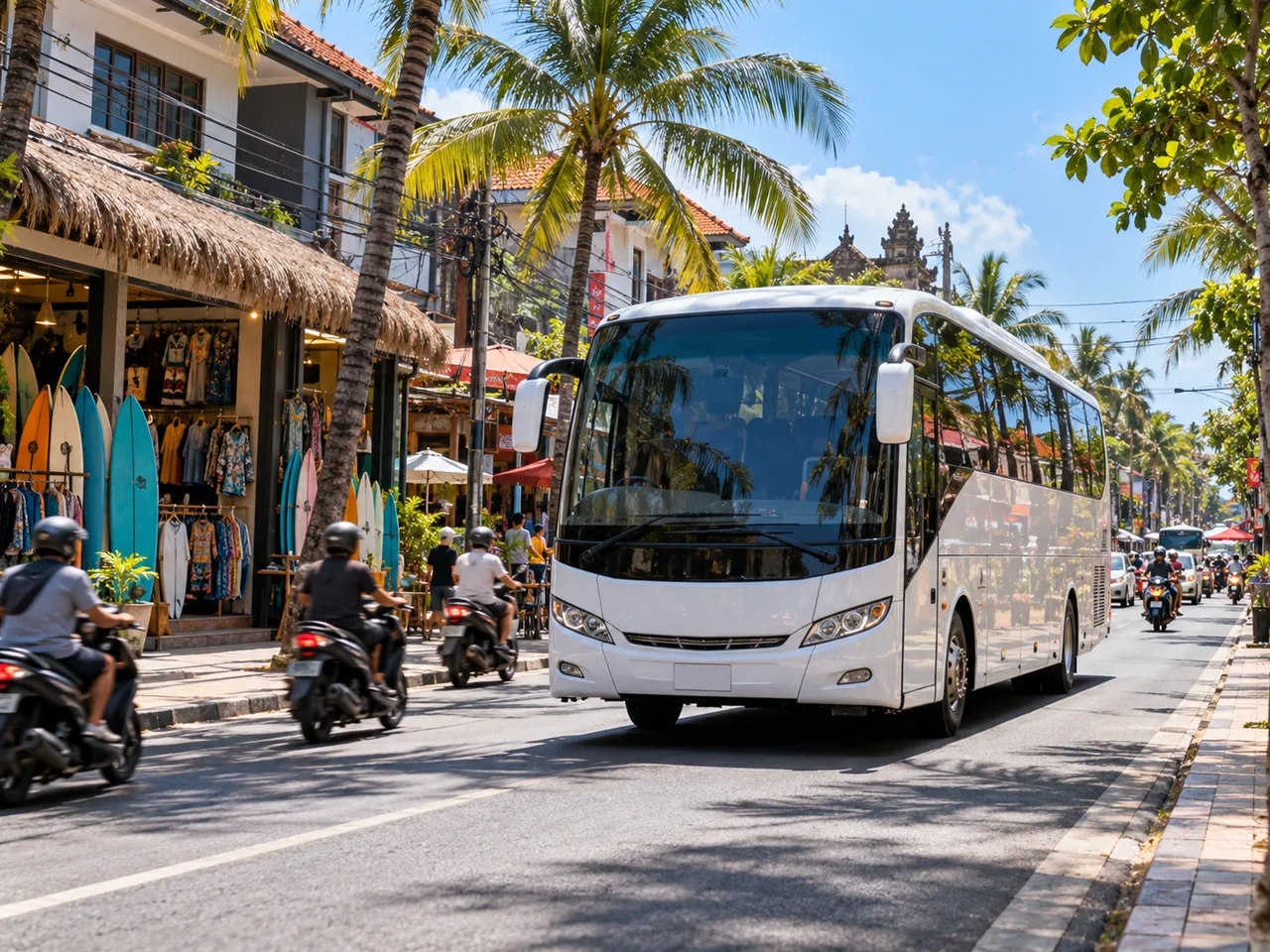
Large coaches need more turning space and legal loading room than cars or MPVs. Historic villages, clifftop venues and some Ubud or Canggu properties may require a nearby meeting point, a smaller feeder vehicle or a different access plan. Confirm the exact property entrance before travel when access is important.
Vehicle descriptions on this website are category guides. They do not promise a specific make, model, year, luggage compartment, Wi-Fi connection, USB socket, toilet, wheelchair lift or seat layout. If an amenity is essential, request it and have it confirmed for the assigned vehicle.
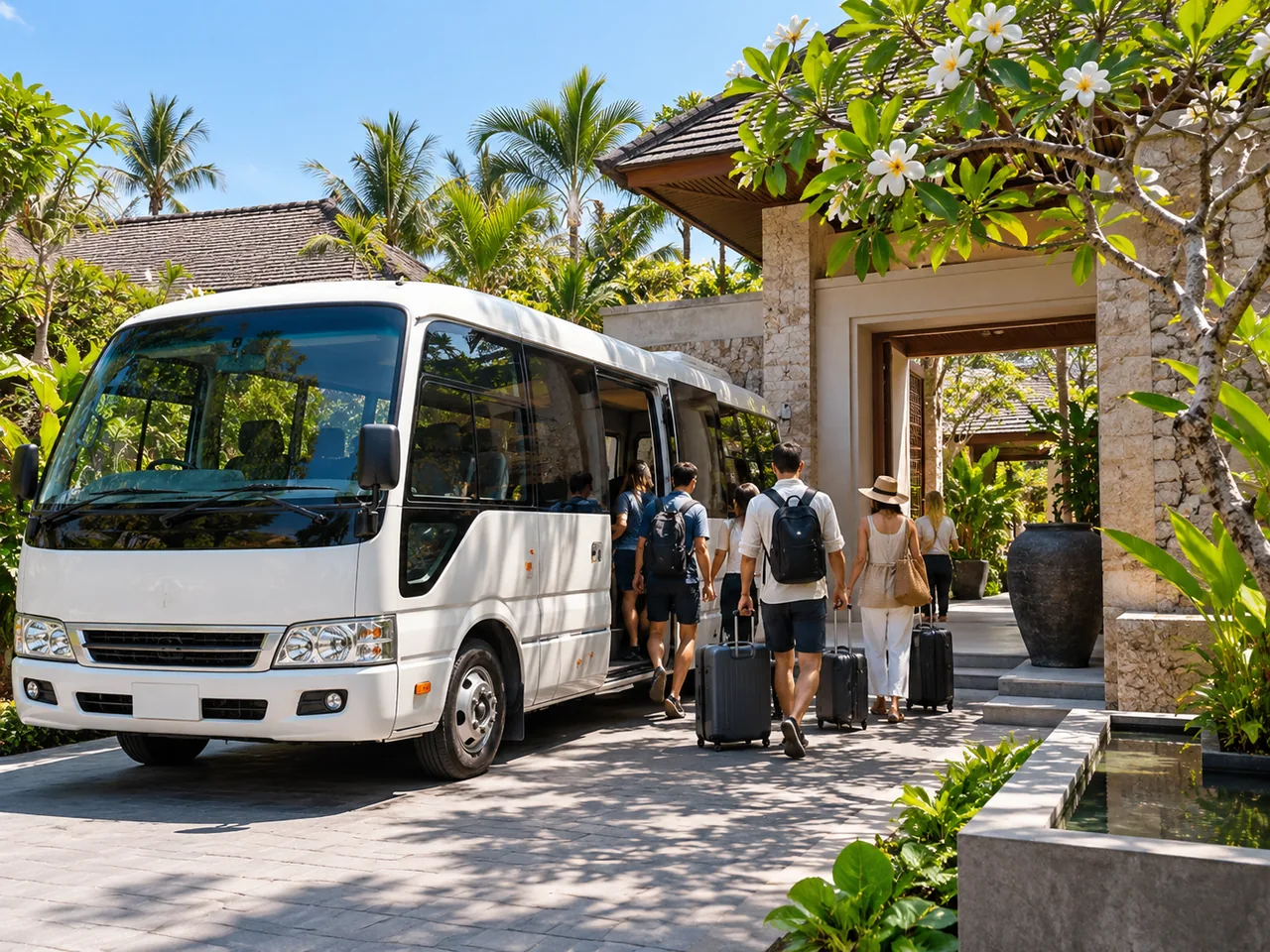
For hotel and villa pickups, share the full property name and pin or street address. Bali contains many similarly named villas and resorts, and drivers need an exact meeting point. For large groups, name one group leader and keep the passenger list or rooming allocation available.
If the itinerary includes temples or cultural sites, allow time for local access rules, walking from the vehicle and group coordination. If the trip includes mountain or north-Bali destinations, plan realistic driving periods and rest breaks rather than compressing the schedule.
Luggage affects capacity. A passenger count that fits the seats may still need a larger vehicle if the group has suitcases, golf bags, surf equipment, event materials or other bulky items. Share the approximate number and type of larger items before confirmation.
Group organisers should also decide how passengers will communicate during the journey. One lead contact, a simple passenger manifest and clearly named pickup points are especially useful when several hotels or villas are involved. For multi-coach movements, vehicle numbers and separate group leaders help keep loading controlled.
Bali itineraries often mix fixed deadlines with flexible sightseeing. Airport check-in, ceremony starts, conference registration and ferry departures should be treated as fixed times, while photo stops and shopping visits should be allowed to flex around traffic. Building the schedule in this order reduces the risk of the group missing an important connection.
Parking and waiting arrangements should be considered before the travel day. Some hotels and attractions allow a coach to load only briefly, while others use a separate parking area. If the driver must move away after drop-off, the group should have a clear collection point and contact process for the return journey.
Where a programme spans several regions of Bali, it is usually better to group nearby stops together than to repeatedly cross the island. South Bali, Ubud and the central highlands, east Bali and the north coast each have different travel patterns. A geographically sensible sequence gives the group more useful time at the destination and reduces unnecessary hours on the road.
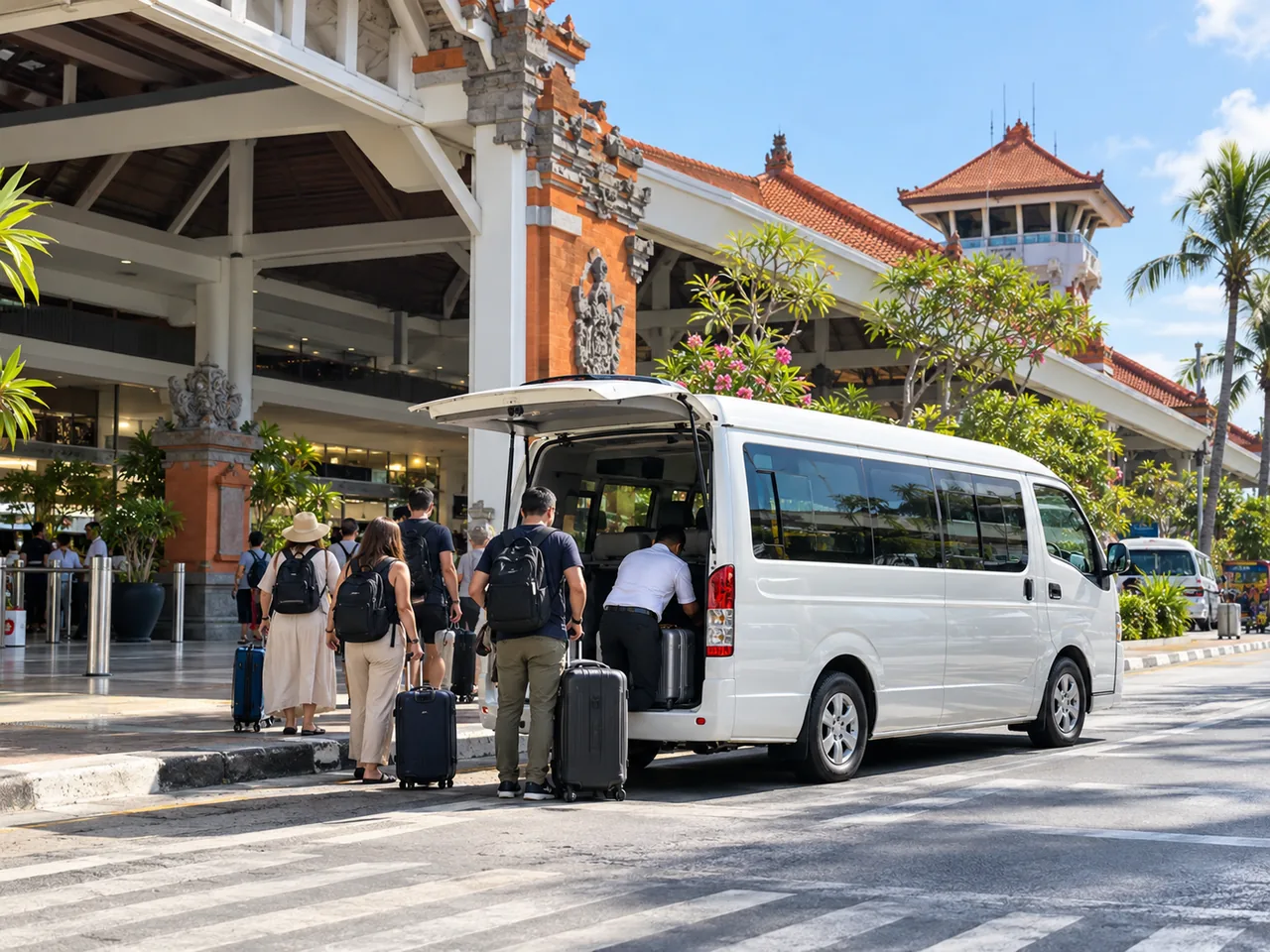
For airport transfers, provide the flight number and whether the journey is domestic or international. I Gusti Ngurah Rai International Airport has separate domestic and international terminal areas, so the live flight details should determine the meeting plan.
For cruise and harbour work, ferry or ship schedules can change and group loading areas may differ from normal hotel pickup points. Keep the group contact reachable and confirm the final meeting location shortly before travel.
Confirm the flight number and domestic/international sector before travel. Ngurah Rai Airport has separate domestic and international terminal areas.
Information to send for a quote
- Exact pickup point and requested pickup time
- Destination, intermediate stops and return requirements
- Total passenger number, including children
- Large and small luggage quantities
- Flight, ferry or event details where relevant
- Any accessibility or special equipment requirements
- Any fixed venue deadline or restricted access information
Vehicle allocation
The final vehicle should be selected against the whole operating plan. Passenger capacity matters, but luggage, road access, journey length and requested amenities may require a different category. For very large groups, multiple coaches can be scheduled with separate vehicle leaders and coordinated arrival times.
Timing and access
Journey times remain planning estimates until the itinerary is final. Congestion, ceremonies, weather, events, roadworks and property access can affect the route. For time-critical movements, allow a practical margin and confirm the pickup point with the hotel, villa or venue.